
Cosmetic
Teeth Whitening, What Actually Works
Whitening is the treatment people ask about most and understand least. Before spending anything, it is worth knowing whether your teeth are stained on the surface or darker throughout, because the two need completely different answers.
Surface stain or internal colour
Surface stain comes from tea, coffee, red wine, tobacco and areca nut. It sits on the outside of the enamel and comes off with a professional clean and polish. If your teeth have darkened gradually over years of tea drinking, a scaling appointment may be all you need.
Internal colour is different. Dentine, the layer beneath enamel, is naturally yellow and grows more so with age as enamel thins. Some teeth are darker from the start, and a tooth that has had a root canal often greys from the inside. Polishing does nothing for any of these. They need bleaching, or in some cases a veneer or crown.
What the products do
Whitening toothpaste contains mild abrasives and sometimes a very low concentration of peroxide. It removes surface stain and holds a result. It does not lighten the tooth.
Charcoal powder is abrasive and nothing more. Used regularly it wears enamel, and since the dentine underneath is yellower, long term use can leave teeth looking darker than when you started. We see this often enough that it is worth stating plainly.
Home kits from a pharmacy use low concentration gel in a tray that does not fit your teeth. The gel leaks onto the gums and the result is uneven. They are not dangerous at those concentrations, but they rarely justify the money.
In clinic and custom tray bleaching
In clinic whitening uses a high concentration gel with the gums fully isolated, usually across two or three cycles in a single appointment of around ninety minutes. It gives the fastest visible change.
Custom tray bleaching uses impressions of your teeth to make trays that fit exactly, with gel worn at home for a set time each day over two weeks. The result is comparable and often lasts longer because you keep the trays for occasional top ups.
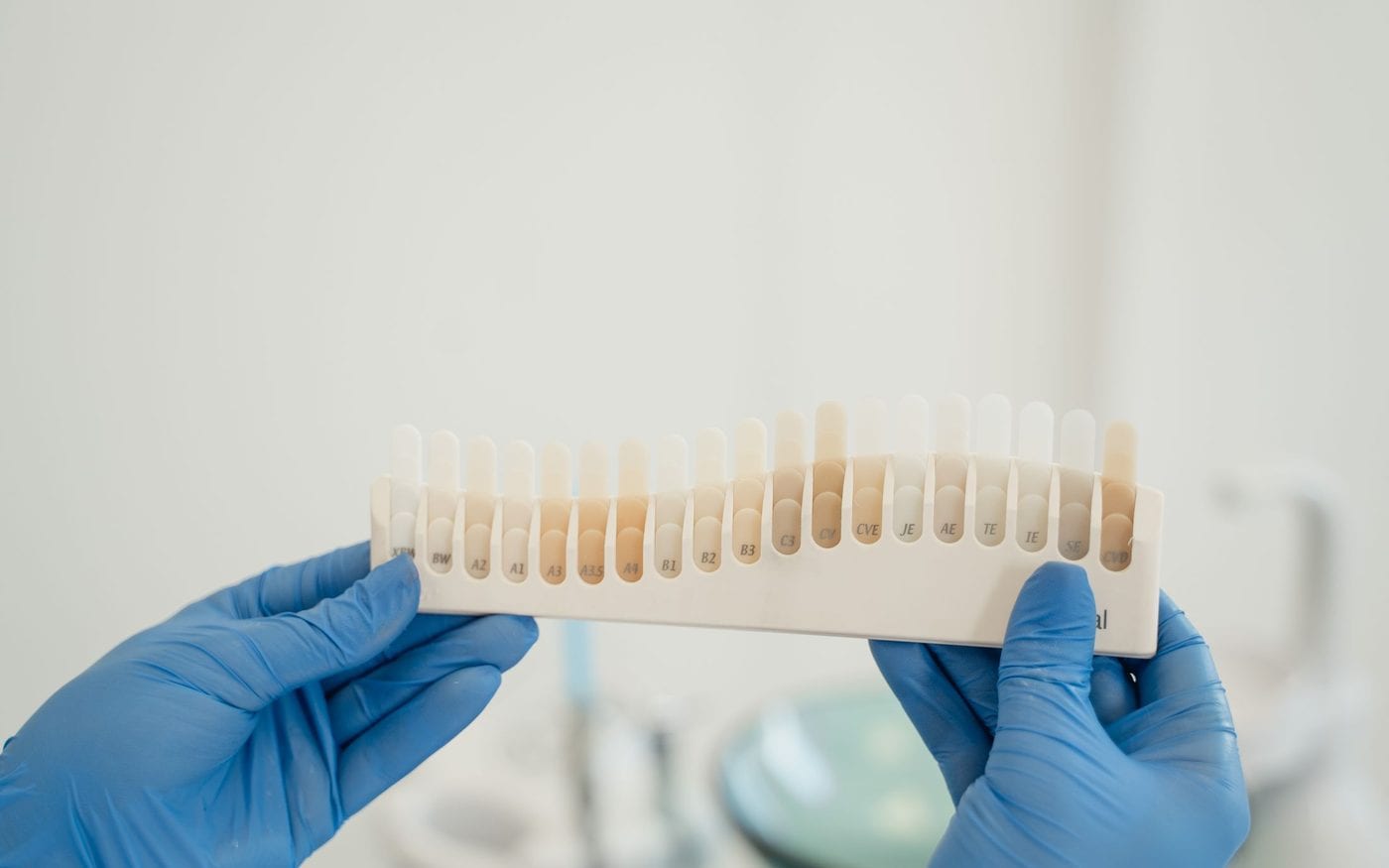
Either way we take a shade reading before starting and again at the end, so the result is measured rather than argued about.
Before you book
Whitening only works on natural tooth structure. Crowns, veneers and white fillings do not change colour, so if you have a crown on a front tooth it will need replacing after whitening to match the new shade. That has to be planned before you start, not discovered afterwards.
Active decay and untreated gum disease need dealing with first. Sensitivity during treatment is common, temporary, and manageable with a desensitising paste in the weeks beforehand.
Results last one to three years depending on what you eat, drink and smoke. Nothing about it is permanent, and anyone promising otherwise is selling.
In short
- A polish fixes surface stain, bleaching changes the tooth colour itself
- Charcoal is abrasive and can leave teeth looking darker over time
- Crowns and white fillings will not lighten and may need replacing
- Treat decay and gum disease before whitening anything