
Laser dentistry
Using a focused beam of light in place of a blade for gum and soft tissue work, which cuts and seals at the same time.
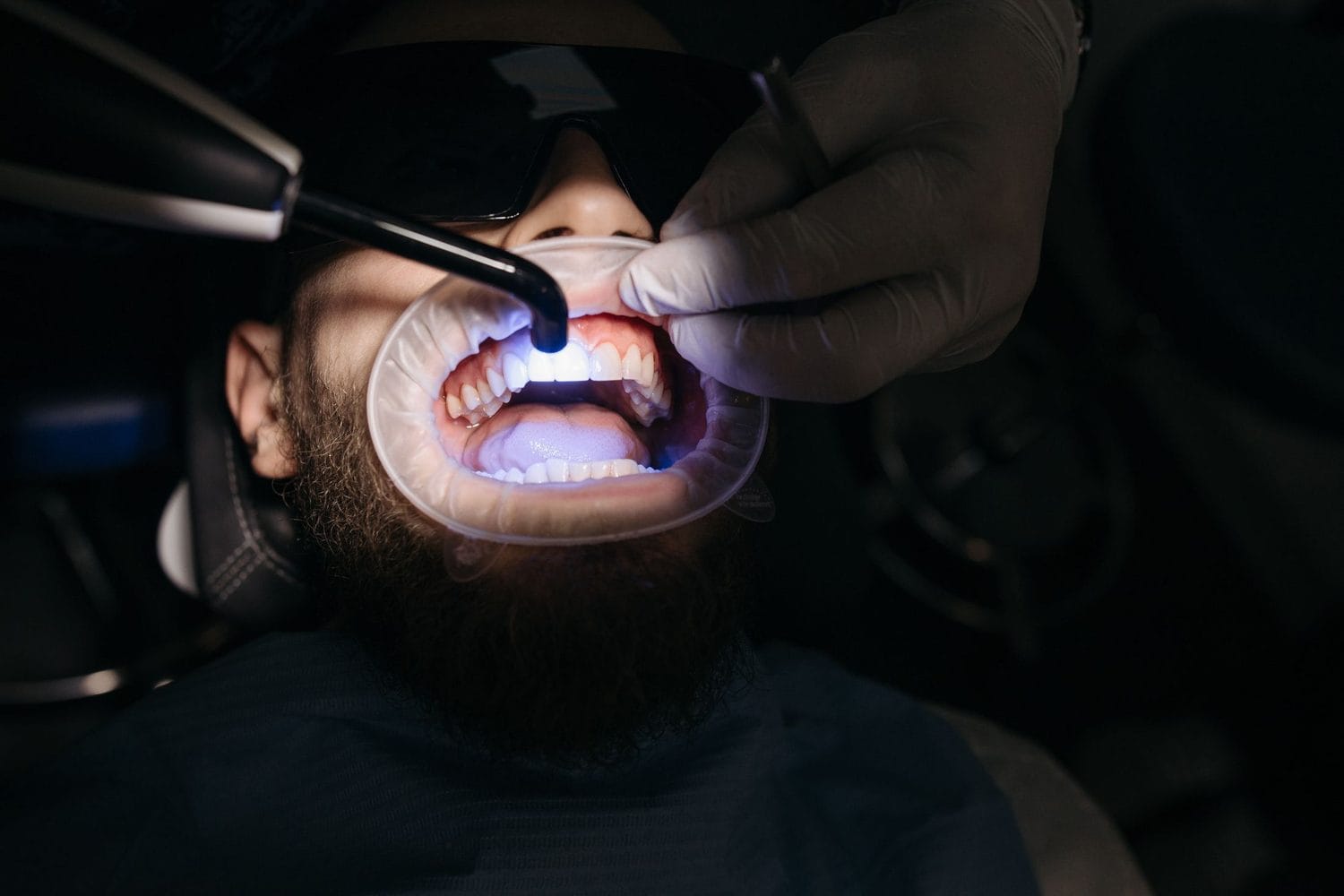
A dental laser delivers energy at a wavelength that soft tissue absorbs. It cuts and seals small blood vessels as it goes, so there is far less bleeding than with a blade and often no need for stitches.
That makes it well suited to gum work, where a clear, dry field matters and where the healing is what patients notice. It is not a replacement for surgery, and it does not remove the need for a drill in most restorative work.
We use it where it genuinely gives a better result rather than as a headline. If a conventional approach suits your case better, that is what we will recommend.
- Bleeding
- Minimal, the beam seals as it works
- Sutures
- Often not required
- Anaesthesia
- Topical or a small local dose for most soft tissue work
- Best used for
- Gum contouring, pocket disinfection, frenectomy, ulcers
At a glance
When it is needed
Signs we look for
A gum line that sits unevenly
Where teeth look short or the gum is higher on one side, reshaping evens the line. It is often done alongside veneers or crowns rather than on its own.
Gum pockets that keep returning
After deep cleaning, a laser can be used to disinfect the pocket and remove diseased lining tissue, which supports the healing.
A tight frenum
The band of tissue under the lip or tongue can restrict movement or pull the gums away. Releasing it is quick and heals well with a laser.
Recurring mouth ulcers
Laser treatment of an aphthous ulcer settles the pain quickly and shortens how long it lasts.
Step by step
What actually happens
- 01
Assessment
The gum condition is charted and the cause identified. Laser treatment on top of untreated gum disease achieves very little, so the underlying problem is addressed first.
- 02
Preparation
Protective eyewear for you and the team. Most soft tissue work needs only topical or a small amount of local anaesthetic.
- 03
Treatment
The beam is applied in short passes. There is a distinctive smell and a warm sensation, but the procedure itself is quiet with no vibration.
- 04
Healing
The treated tissue seals over rather than being stitched. Most sites are comfortable within a couple of days.
Afterwards
Looking after it at home
Questions
laser dentistry, answered
If your question is not here, call the clinic and a dentist will talk it through before you book anything.
Yes, used within its indications and with proper eye protection for everyone in the room. The energy is absorbed in a very shallow layer of tissue, which is what makes it precise.
Soft tissue laser work is generally more comfortable than the equivalent with a blade, and much of it needs only topical anaesthetic. You feel warmth rather than sharpness.
Not in most restorative work. Removing decay and preparing a tooth for a crown still needs conventional instruments. The laser earns its place in soft tissue and gum procedures.
Most soft tissue sites are comfortable in two to three days and look settled within a week or two, though the final gum contour takes a little longer to mature.
Also relevant
Laser Dentistry for patients from