
Dentistry for children
Looking after children's teeth from the first tooth onwards, and building the habit of coming to a dentist without dreading it.
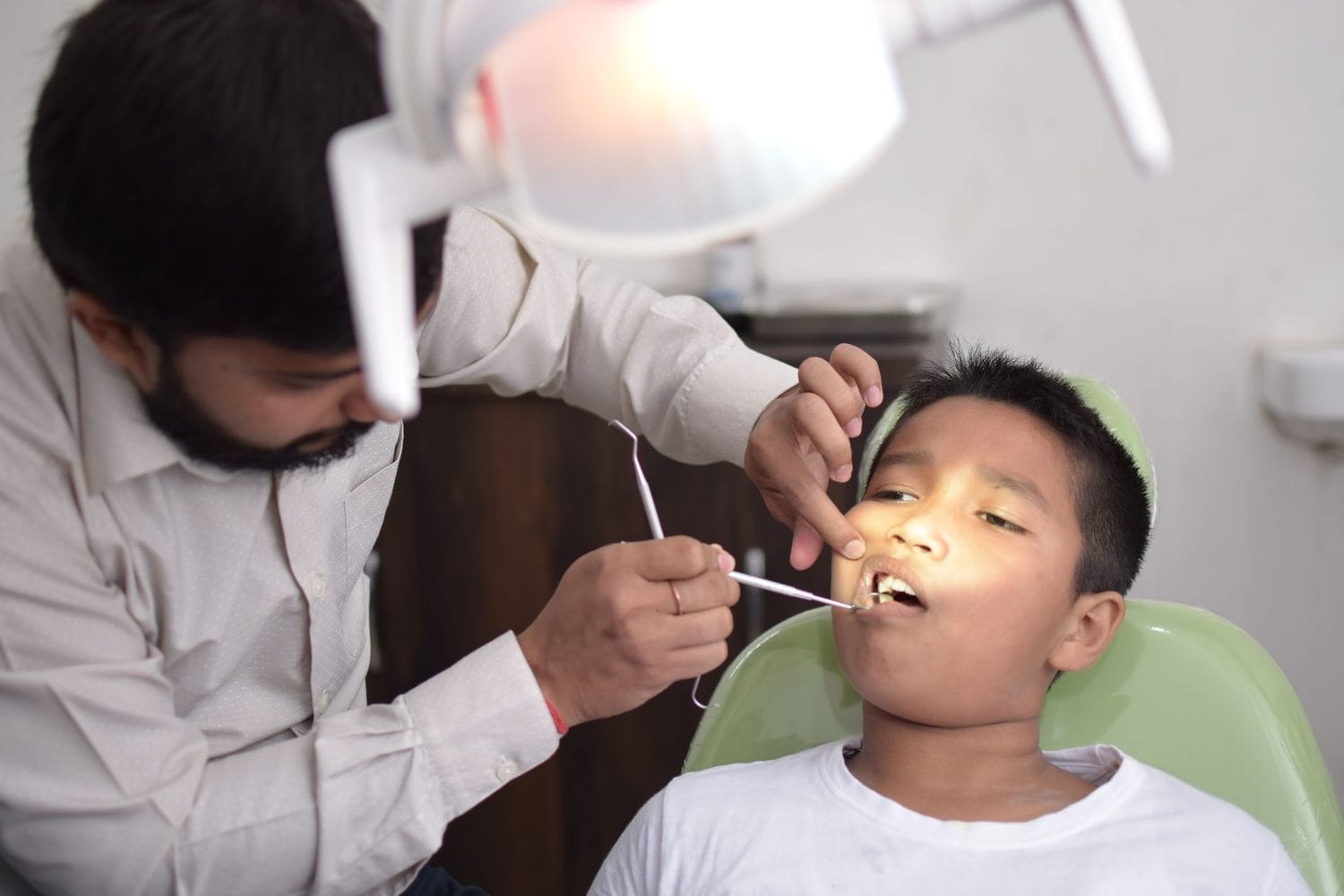
The first few visits decide how a child feels about dentists for the rest of their life. We would rather spend a first appointment letting a nervous child sit in the chair, count their teeth and go home than force treatment and lose their trust.
The clinical side is genuinely different from adult work. Milk teeth have thinner enamel and larger pulps, so decay travels faster and a small cavity becomes a painful one sooner than parents expect.
Milk teeth are worth treating. They hold the space for the permanent teeth behind them, and a child who loses them early often ends up needing orthodontic work later that could have been avoided.
- First visit
- By the first birthday, or when the first tooth appears
- Check ups
- Every six months while the teeth are changing
- Sealants
- Once the permanent molars come through, around age six
- Appointment length
- Kept short, and paused if the child needs it
At a glance
When it is needed
Signs we look for
White or brown marks on the front teeth
Chalky white patches are early decay, before a hole forms. Caught at this stage it can often be arrested rather than drilled.
Complaining while eating sweets or cold things
Children rarely describe toothache clearly. Avoiding one side, or reacting to cold, is often the first sign.
Thumb sucking past the early years
A habit that continues once the permanent front teeth arrive starts to push them forward. A simple appliance interrupts it.
A permanent tooth coming in behind a milk tooth
Common in the lower front. It usually resolves on its own but is worth checking so the milk tooth does not hold the new one out of line.
Step by step
What actually happens
- 01
Meeting first
The child sits in the chair, sees the mirror and the light, and nothing is done without telling them what it is first. We explain, show, then do.
- 02
Examination
A full look at the teeth and bite, with an x-ray only where there is a reason for one, such as decay suspected between teeth.
- 03
Prevention
Fissure sealants on the deep grooves of new back teeth, and fluoride varnish where the risk is high. This is the cheapest dentistry there is.
- 04
Treatment when it is needed
Fillings, pulp treatment for a badly decayed milk tooth, or a space maintainer if a tooth has been lost early. Kept short, and stopped if the child has had enough.
- 05
Watching the bite
As permanent teeth arrive we track crowding and jaw growth, so orthodontic treatment can be timed properly rather than started too early or too late.
Afterwards
Looking after it at home
Questions
kids dentistry, answered
If your question is not here, call the clinic and a dentist will talk it through before you book anything.
By their first birthday or when the first tooth appears, whichever comes first. That early visit is mostly about advice and getting them used to the place rather than treatment.
Yes. They hold the space for the permanent teeth and are needed for chewing and speech. An untreated milk tooth can also become infected, which is painful and can affect the permanent tooth forming underneath it.
We go at their pace. The first visit may be nothing more than sitting in the chair and having their teeth counted. Rushing a frightened child achieves one appointment and costs you the next ten years.
A thin coating flowed into the deep grooves of the back teeth, where a toothbrush bristle cannot reach. It takes a few minutes per tooth, needs no drilling or injection, and prevents a large share of childhood decay.
Reading on this treatment
Also relevant
Kids Dentistry for patients from