
Braces and aligners
Moving teeth into position with steady, controlled force, using fixed braces or a series of removable aligners.
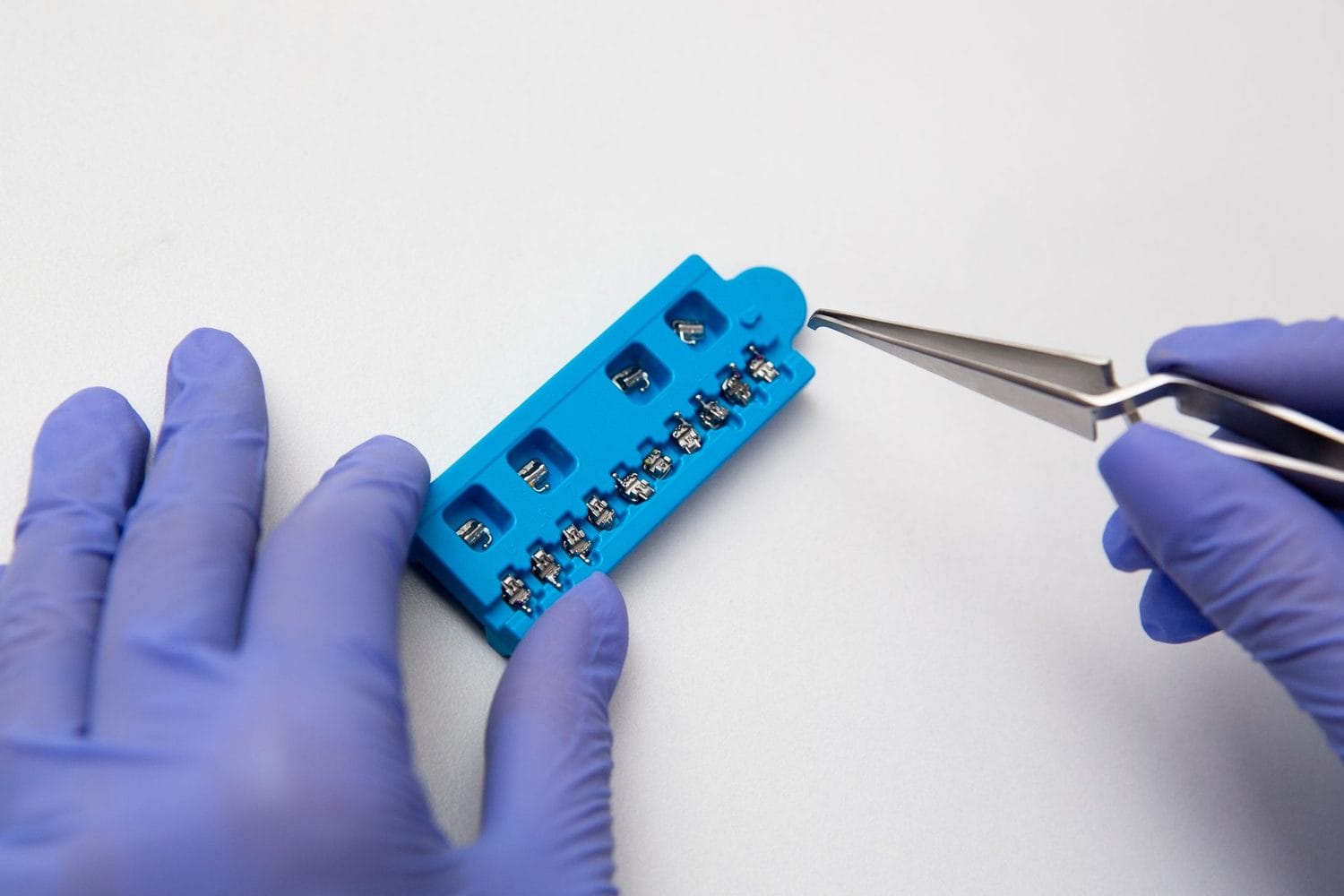
Teeth move when gentle, continuous pressure is applied to them. Bone remodels ahead of and behind the tooth, and the tooth travels through the jaw. That is true whether the force comes from a bracket and wire or from a sequence of aligners.
Which appliance suits you depends on what needs correcting rather than on preference alone. Rotations and bite corrections respond better to fixed braces. Mild crowding and relapse after previous treatment often suit aligners well.
Straightening is not only cosmetic. Crowded teeth are harder to clean and a bad bite loads some teeth far more than others, which shows up as wear and cracks years later.
- Typical duration
- Twelve to twenty four months for comprehensive cases
- Review visits
- About once a month
- Aligner wear
- Twenty to twenty two hours a day for them to work
- After treatment
- Retainers, worn nightly long term
At a glance
When it is needed
Signs we look for
Crowding or overlap
Teeth that sit on top of one another trap plaque in places a brush cannot reach, which is why crowding often comes with repeated decay in the same spots.
Gaps between teeth
Spacing can be closed orthodontically, which is usually a better answer than masking it with veneers on otherwise healthy teeth.
An overbite or underbite
When the front teeth do not meet correctly the load moves onto teeth that were not built to take it, and the wear accumulates.
A jaw that clicks or tires
Bite problems and jaw joint symptoms often travel together, and correcting the bite is part of settling them.
Step by step
What actually happens
- 01
Records
Photographs, x-rays and a scan or impression. These are measured to work out exactly which teeth need to move and how far.
- 02
The plan
You see the appliance options, the expected duration and the cost before anything is fitted. Extractions, if the case needs space, are agreed at this stage rather than sprung on you later.
- 03
Fitting
Braces are bonded in a single appointment of around an hour. With aligners you receive your first sets along with instructions on wear time.
- 04
Adjustments
Roughly monthly. Wires are changed to progressively firmer ones, or you move through your aligner sequence with periodic checks.
- 05
Retention
Teeth drift back towards where they started. Retainers hold the result, and this stage is not optional if you want the work to last.
Afterwards
Looking after it at home
Questions
orthodontic treatment, answered
If your question is not here, call the clinic and a dentist will talk it through before you book anything.
No. Teeth move at any age because the biology is the same, though treatment can take a little longer in adults. A good share of our orthodontic patients are working adults.
Aligners are discreet and removable, which suits mild to moderate cases and adults who cannot wear fixed braces at work. Braces handle complex rotations, bite correction and extraction cases more predictably. The examination decides which is realistic for you.
Fitting does not hurt. For a few days after fitting and after each adjustment the teeth ache when biting, which soft food and ordinary painkillers cover.
Only when there is not enough room in the jaw for the teeth to line up. Many cases are treated without extractions. It is decided from the measured records, not on sight.
Also relevant
Orthodontic Treatment for patients from