
Prevention
Brushing and Flossing Techniques
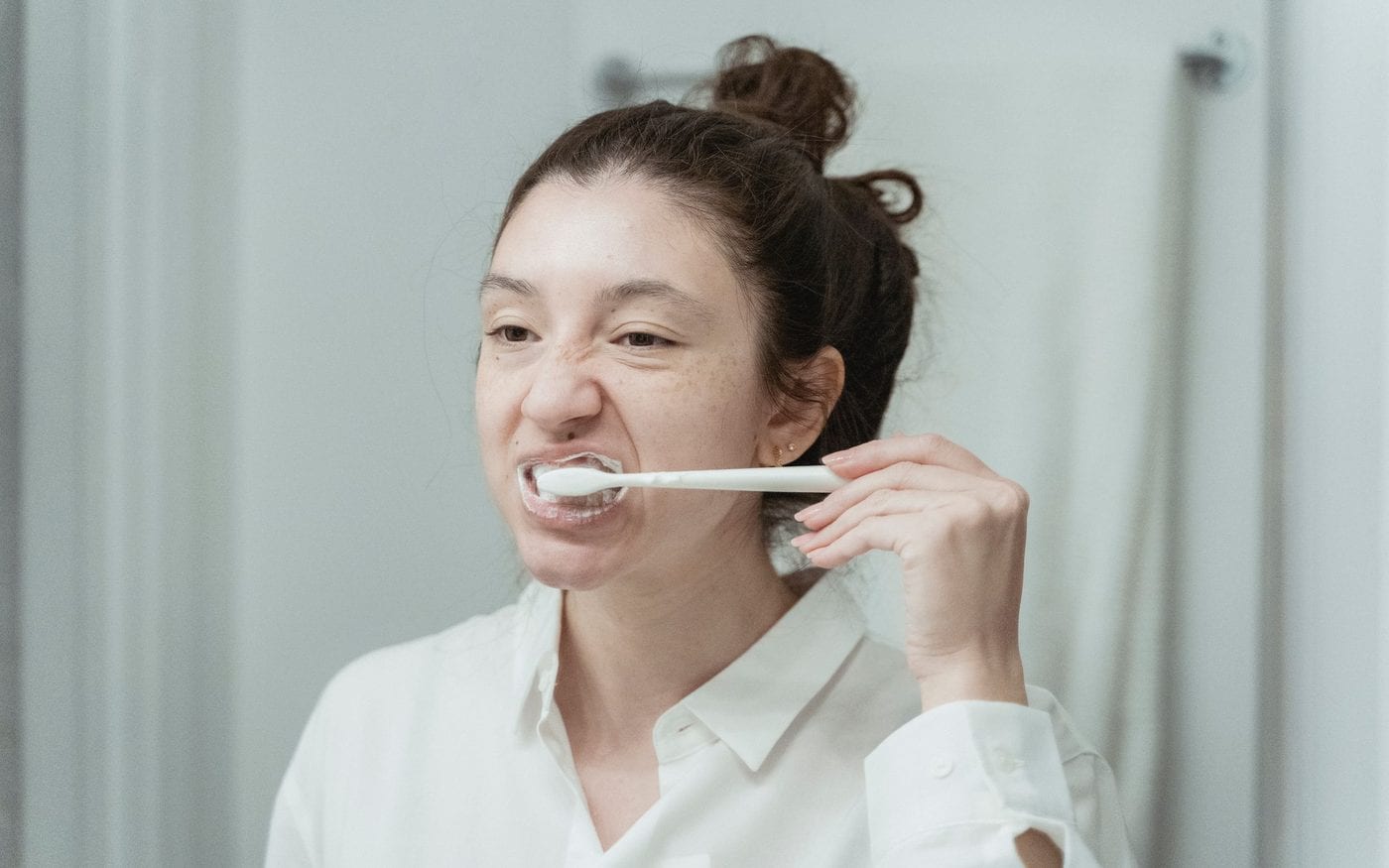
Almost everyone who walks into the clinic tells us they brush twice a day. Far fewer are brushing in a way that actually removes plaque from the places it settles. The difference is not effort. It is angle, time and sequence.
Plaque is a soft film. It wipes away easily for the first day or so, then it hardens into calculus that no brush can shift. Everything below is aimed at catching it while it is still soft.
Hold the brush at forty five degrees
Point the bristles towards the gum line rather than straight at the flat face of the tooth. Plaque collects in the shallow groove where the gum meets enamel, and a brush held flat glides straight over it.
Use short strokes, roughly the width of one tooth, and let the bristle tips do the work. If the bristles are splaying outwards while you brush, you are pressing far too hard. Hard brushing does not clean better. It wears a notch into the neck of the tooth and pushes the gum upwards, which is how sensitivity starts.
Two minutes, split into four
Divide the mouth into four quadrants and give each one thirty seconds. Most people spend their two minutes on the outer surfaces of the front teeth because those are the ones they can see in the mirror, and give the inner surfaces of the lower molars almost nothing. Those back inner surfaces are where we find the heaviest tartar deposits.
A soft bristle brush is the right choice for nearly everyone. Medium and hard bristles sell well and damage gums. Replace the brush every three months, or sooner if the bristles have lost their shape.
Floss reaches what the brush cannot
Each tooth has five surfaces. A brush cleans three of them. The two surfaces facing the neighbouring teeth stay untouched, and those contact points are where a large share of adult cavities begin.
Take about forty centimetres of floss, wind it around the middle fingers, and guide it between the teeth with a gentle sawing motion. Once it is through the contact, curve it into a C shape against one tooth and slide it just under the gum, then repeat against the tooth on the other side. Snapping the floss straight down cuts the gum and teaches people to give up on flossing altogether.
If your hands do not cooperate with string floss, interdental brushes are just as effective and often easier. Water flossers help around bridges and implants. The best tool is the one you will actually use every night.
The order that works best
Floss first, then brush. Flossing loosens debris from between the teeth so the fluoride in your toothpaste can reach those surfaces instead of sitting on top of a plug of plaque.
After brushing, spit out the excess paste and stop there. Rinsing with water immediately afterwards washes away the fluoride that was about to do the work. Leaving a thin film on the teeth is the whole point.
In short
- Angle the bristles into the gum line, not flat against the tooth
- Two minutes, thirty seconds per quadrant, soft bristles only
- Floss before brushing, and curve it against each tooth in turn
- Spit after brushing rather than rinsing the fluoride away