
Treatment
Does a Root Canal Actually Hurt
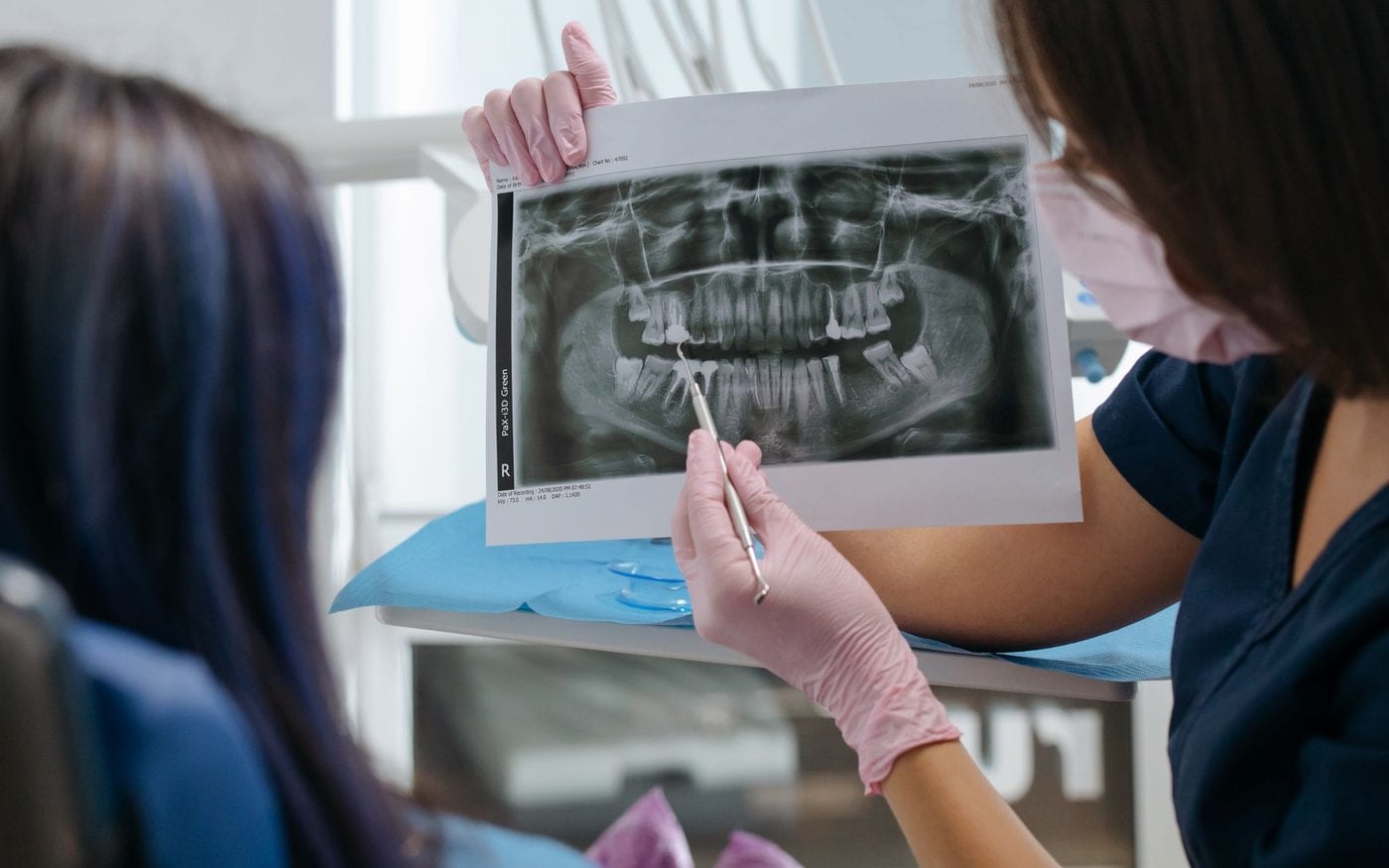
No procedure in dentistry has a worse reputation. People arrive having already decided they would rather lose the tooth. That reputation was earned decades ago, before rotary instruments, before rubber dam isolation and before anaesthetic that reliably reaches an inflamed nerve.
The honest answer is that a root canal removes the pain you came in with. The throbbing that keeps you awake is the nerve inside the tooth dying under pressure. Taking that nerve out is what stops it.
Why the tooth started hurting
Inside every tooth is a chamber of soft tissue containing nerve and blood supply. When decay, a crack or a deep old filling lets bacteria reach that chamber, the tissue becomes inflamed. It has nowhere to swell because it is enclosed in solid dentine, so pressure builds and the pain becomes constant rather than triggered.
Sensitivity to cold that disappears in a second is usually not this. Pain that lingers for minutes after a hot drink, pain that wakes you at night, or a tooth that hurts to bite on are the signs that the nerve is involved.
What we do during the appointment
The tooth is numbed first, and we do not start until you confirm it is numb. A rubber dam is placed to isolate the tooth so nothing from the rest of the mouth enters the canal and nothing from the canal reaches your throat.
We open the top of the tooth, remove the inflamed tissue, and shape the canals with fine rotary files while irrigating them. Once the canals are clean and dry they are sealed with an inert filling material, and the access opening is closed.
Most straightforward front and premolar teeth are completed in a single sitting of around an hour. Molars with curved canals, or teeth with an active infection at the root tip, are better done across two visits.
Afterwards
The tooth is usually tender to bite on for two or three days because the ligament around the root has been irritated. That tenderness responds to ordinary painkillers and settles on its own. Sharp spontaneous pain afterwards is not normal and is worth a phone call.
A root treated tooth has lost its blood supply and becomes brittle over time. Back teeth take the full force of chewing, so a crown is not an upsell in that position. It is the difference between the tooth lasting years and splitting the first time you bite something hard.
The alternative is worse
The other option is extraction. That solves the pain too, but it leaves a gap that the neighbouring teeth drift into and the opposing tooth grows down towards. Replacing it with an implant or a bridge costs considerably more than the root canal and crown would have.
Keeping your own tooth is almost always the better outcome. The root beneath it maintains the bone in a way no artificial replacement fully matches.
In short
- The procedure ends the toothache rather than causing it
- Single sitting treatment is realistic for most front teeth and premolars
- Expect two or three days of tenderness when biting, nothing sharper
- A crown on a root treated back tooth prevents it splitting later